
Title: Acne vs. Pimples: What’s the Difference and Why It Matters for Your Skin
Let’s settle the debate once and for all: Are acne and pimples the same thing? If you’ve been using these words interchangeably, you’re not alone. However, understanding the difference isn’t just about vocabulary—it’s the first step toward effective skincare. Knowing what you’re actually dealing with determines whether you reach for a spot treatment or book a dermatologist appointment. Let’s break it down.
The Short Answer: All Pimples Are Acne, But Not All Acne Is Pimples
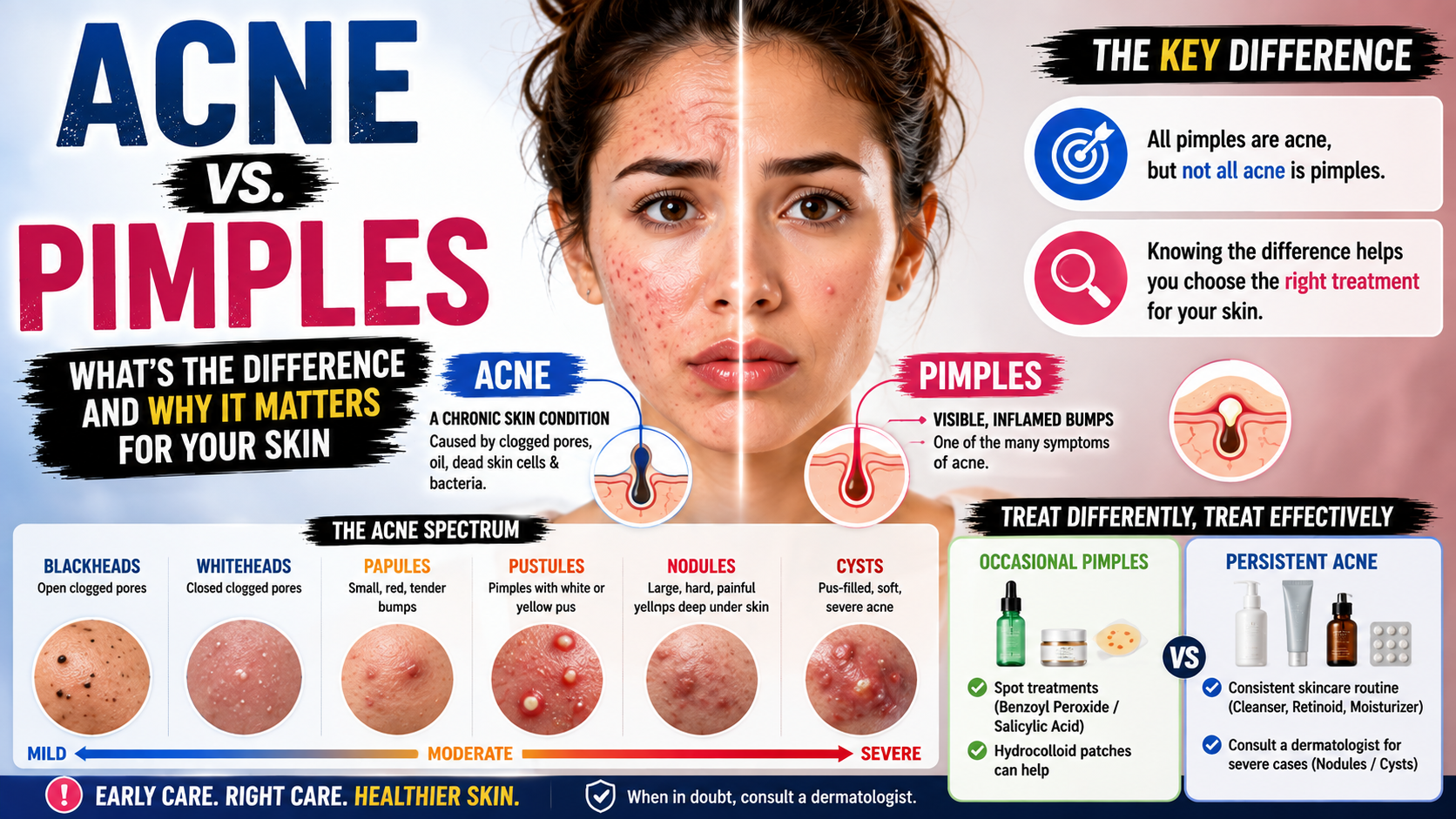
Think of it this way: acne is the overarching skin condition, while pimples are just one of its many symptoms. Acne is a chronic, inflammatory skin disorder that occurs when hair follicles become clogged with oil (sebum) and dead skin cells. This clogged environment becomes a breeding ground for bacteria, leading to various types of breakouts. Pimples, on the other hand, are the visible, often painful bumps that appear as a result of this condition.
The Acne Spectrum: More Than Just Red Bumps
Acne isn’t a one-size-fits-all problem. It exists on a spectrum of severity and includes several non-inflamed and inflamed lesions:
-
Blackheads and Whiteheads (Comedonal Acne): These are non-inflammatory forms of acne. Blackheads are open clogged pores that oxidize and turn dark, while whiteheads are closed pores beneath the skin’s surface. They are considered mild acne but are not technically “pimples” in the classic sense.
-
Papules and Pustules (The Classic Pimples): When bacteria enter those clogged pores, they become inflamed. Papules are small, red, tender bumps without pus. Pustules are what we typically call pimples—red, inflamed bumps with a white or yellow center filled with pus. These are moderate acne.
-
Nodules and Cysts (Severe Acne): These are large, painful, hard lumps deep under the skin. Cysts are pus-filled and soft to the touch. They are the most severe form of acne and almost always require professional medical treatment, as over-the-counter products rarely penetrate deep enough to help.
Why the Distinction Matters for Treatment
This is where the knowledge really pays off. If you treat a blackhead (mild acne) like a pustule (a pimple), you might over-dry your skin or cause irritation. Conversely, if you treat a cystic nodule like a simple pimple, you will waste time and money on products that cannot reach the infection site.
-
For occasional pimples: Over-the-counter spot treatments containing benzoyl peroxide or salicylic acid can dry them out within a few days. A simple hydrocolloid patch can also reduce inflammation overnight.
-
For persistent acne (frequent pimples, blackheads, or cysts): You need a consistent routine—not just spot treatment. This often includes a gentle cleanser, a retinoid to unclog pores, and non-comedogenic moisturizers. If you have nodules or cysts, please see a dermatologist. Prescription-strength topicals or oral medications (like antibiotics or isotretinoin) are often the only solutions.