# Dandruff vs Dry Scalp: How to Tell the Difference
That persistent itch and those white flakes on your shoulders—is it dandruff or just a dry scalp? While they may look similar, these are two distinct conditions that require different treatments. Here’s how to tell them apart.
## The Key Difference
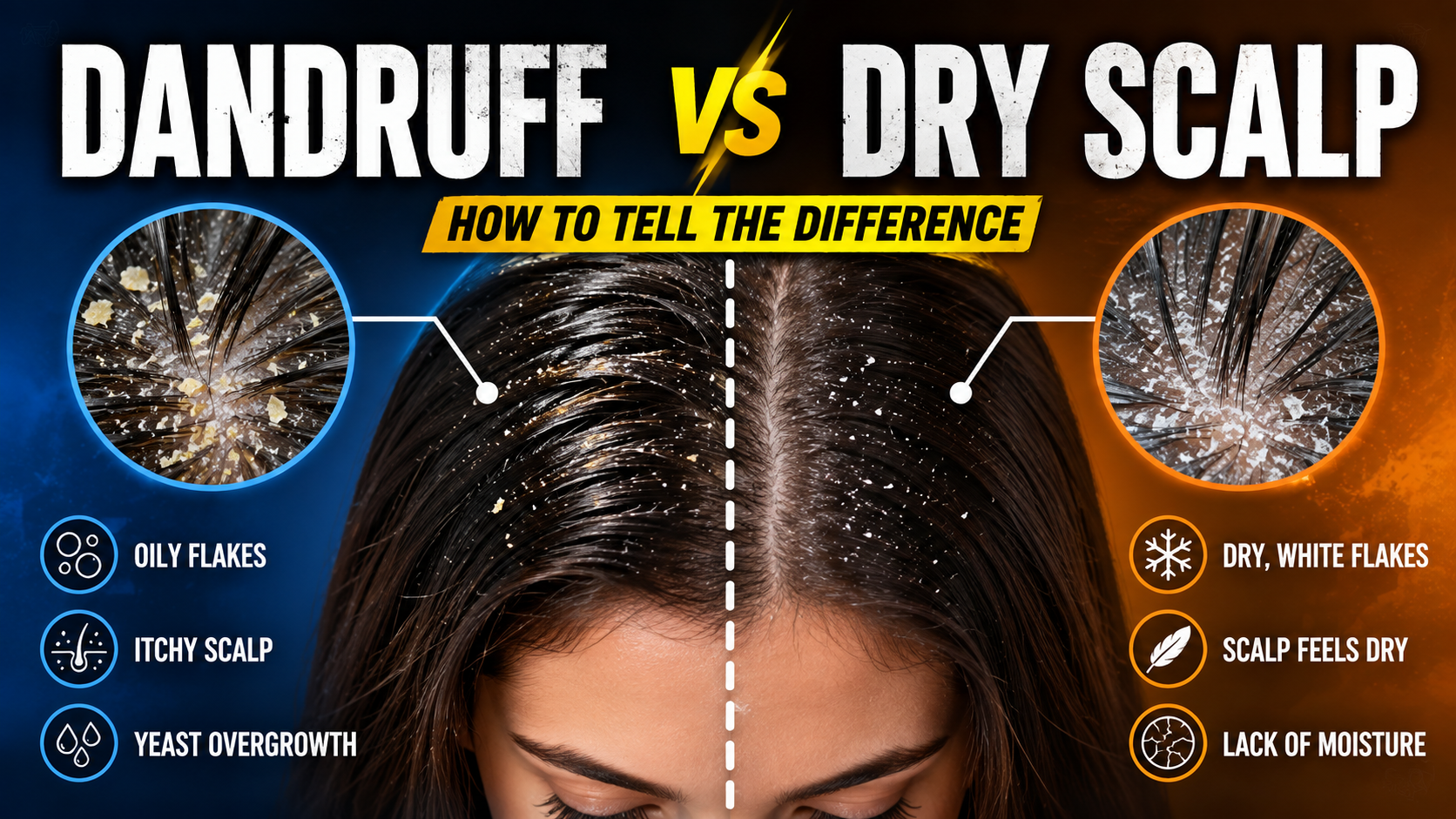
**Dandruff is a medical condition caused by excess oil and yeast overgrowth**, while a dry scalp is simply skin lacking moisture. This distinction determines your treatment approach.
## How to Identify Your Condition
**Signs of Dandruff:**
– Flakes are yellowish, oily, and larger
– Itching is often intense
– Scalp appears greasy or oily
– Flakes may worsen in cold weather
– Often accompanied by scalp redness
**Signs of Dry Scalp:**
– Flakes are white, small, and dry
– Itching is typically mild
– Scalp feels tight and dry
– Flakes look like dust or snow
– Often accompanied by dry skin elsewhere
## The Causes
**Dandruff** stems from Malassezia yeast overgrowth on the scalp, triggered by excess oil production, hormonal changes, stress, or certain hair products. **Dry scalp** results from cold weather, low humidity, overwashing with harsh shampoos, or dehydration.
## The Flake Test
A simple test: flakes from dry scalp typically fall off easily when brushed, while dandruff flakes tend to cling to the scalp and hair due to their oily nature.
## Treatment Approaches
**For Dry Scalp:**
– Use gentle, moisturizing shampoos
– Wash with lukewarm, not hot, water
– Apply a moisturizing conditioner
– Drink more water and use a humidifier
– Avoid harsh sulfates and alcohol-based products
**For Dandruff:**
– Use anti-dandruff shampoos containing zinc pyrithione, selenium sulfide, or ketoconazole
– Lather and leave on for 5 minutes before rinsing
– Wash hair more frequently to reduce oil buildup
– Manage stress levels
– Consider salicylic acid shampoos to exfoliate flakes
## When to See a Dermatologist
If over-the-counter treatments haven’t worked after 4-6 weeks, or if you notice severe redness, swelling, or hair loss, consult a dermatologist. They can prescribe stronger treatments like prescription-strength ketoconazole or corticosteroids.
## The Bottom Line
Treating the wrong condition can make things worse—moisturizing dandruff feeds the yeast, while using dandruff shampoo on a dry scalp causes further irritation. Watch your symptoms carefully, choose treatments accordingly, and remember that consistency is key. Your healthy, flake-free scalp is worth the effort.