
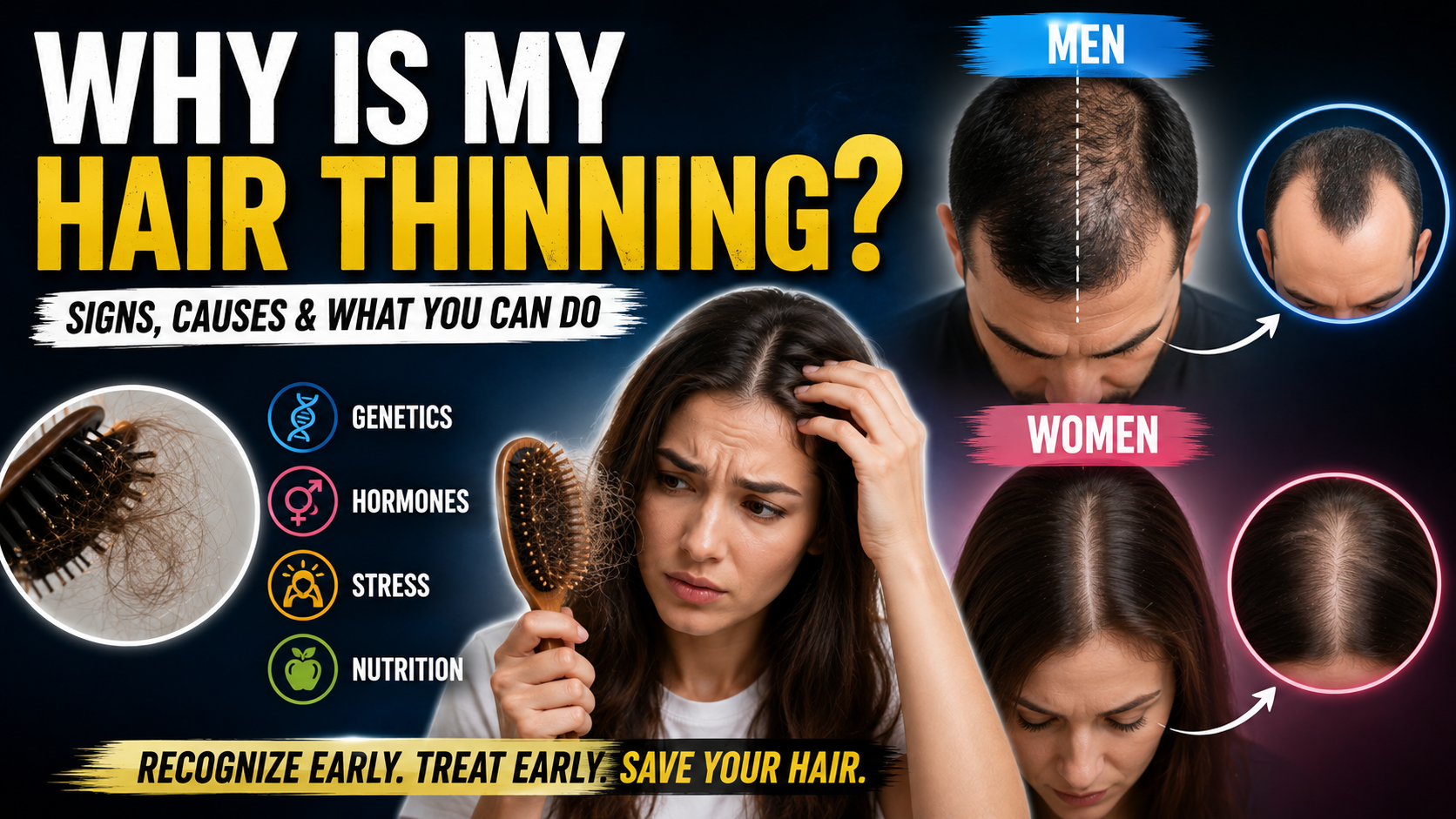
Finding extra hair in your brush or noticing more of your scalp showing through can be alarming. If you’ve been asking “Why is my hair thinning?” you’re not alone—hair loss affects millions worldwide.
## Understanding Pattern Hair Loss
Pattern hair loss, medically known as androgenetic alopecia, is the most common cause of thinning. It’s driven by genetics and hormones, particularly dihydrotestosterone (DHT), which shrinks hair follicles over time. This leads to shorter, finer hair until growth eventually stops.
## Early Signs in Men
Male pattern baldness follows a predictable pattern. The earliest signs include a receding hairline at the temples (forming an M-shape), thinning at the crown, a widening part, and increased shedding in the shower drain. Men typically experience distinct bald spots rather than overall thinning.
## Early Signs in Women
Female pattern hair loss differs significantly. Key signs include a widening center part (the most common indicator), generalized thinning across the entire scalp rather than bald patches, a noticeably thinner ponytail, and more visible scalp when hair is wet. Unlike men, women rarely experience receding hairlines or complete baldness.
## When Shedding Is Concerning
Daily shedding of 50-100 strands is normal. Pay attention if you notice excessive hair in your brush, visible scalp areas that weren’t there before, hair feeling noticeably thinner, or sudden patches of hair loss.
## Common Causes Beyond Genetics
Hormonal changes (pregnancy, menopause, thyroid issues), nutritional deficiencies (low iron, vitamin D), stress, certain medications, and tight hairstyles can all contribute to thinning.
## What You Can Do
The earlier you address hair thinning, the better your results. See a dermatologist for proper diagnosis. Consider topical treatments like minoxidil (FDA-approved for both men and women), prescription medications like finasteride for men, nutritional support, and gentler hair care practices.
## When to Seek Help
Don’t wait until hair loss becomes noticeable. If you’re concerned, consult a professional who can perform scalp examinations and recommend appropriate treatments. The best time to act is when you first notice changes—early intervention offers the best chance of preserving your hair. Remember, hair thinning is common and treatable. Help is available, and the key is recognizing the signs early.